CAT HEALTH
Hairballs or Vomiting? How to Tell What Your Cat Is Actually Doing
 PetvimoHealth Guide
Petvimo StandardReviewed against veterinary references
Hairballs are so strongly associated with cats that frequent gagging and vomiting are sometimes dismissed as normal. That can hide a real gastrointestinal or respiratory problem.
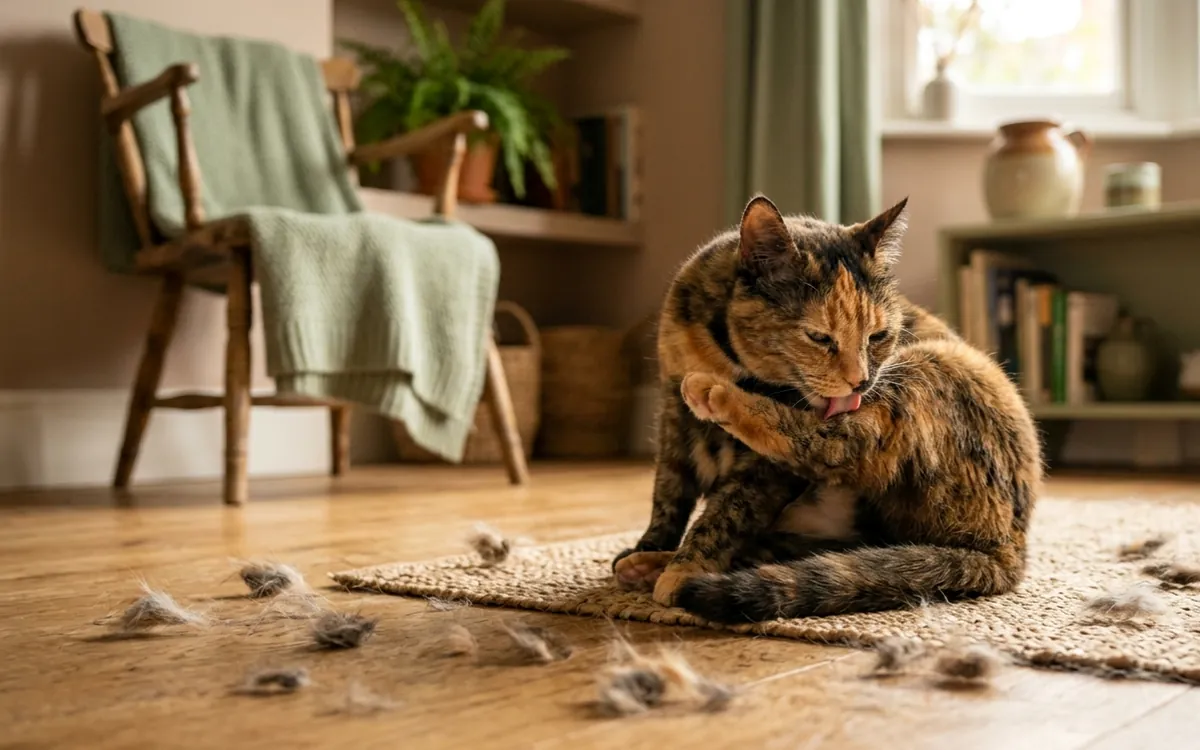
What is a hairball? Cats swallow hair during grooming. Most swallowed hair moves through the digestive tract, but some can collect in the stomach and eventually be vomited. A true hairball is usually a compact mass of hair rather than simply liquid, foam, or food.
Why do some cats get more hairballs? Long-haired cats, heavy groomers, and cats shedding heavily may swallow more hair. Fleas, allergies, pain, and stress can also increase grooming and therefore hair ingestion.
Is frequent hairball vomiting normal? Not necessarily. Repeated vomiting may be associated with gastrointestinal disease, food intolerance, parasites, or other disorders rather than hair alone. A cat that appears to be coughing up a hairball but never produces anything may actually be coughing. Feline asthma and other airway diseases can sometimes be confused with hairball behavior.
What might a veterinarian evaluate? The veterinarian may ask for a video because coughing, vomiting, gagging, and regurgitation can look similar to owners. Depending on the pattern, examination may focus on the digestive system, skin and grooming behavior, or respiratory tract. Imaging or laboratory testing may be recommended.
Treatment approach If excessive hair ingestion is the issue, grooming and management of the reason for over-grooming are important. If the problem is gastrointestinal or respiratory, treatment is directed at the underlying condition.
Petvimo can help owners record videos, frequency, appetite, stool changes, and other symptoms so recurrent episodes are easier to describe accurately.
Frequently asked questions
How often is too often for hairballs?
Increasing or frequent episodes deserve discussion with a veterinarian.
Can a hairball cause blockage?
Large accumulations can contribute to gastrointestinal obstruction.
Could my cat be coughing instead?
Yes. Video can be very helpful in telling the difference.
Please note: This article is for general information and does not replace a veterinarian's physical examination, diagnosis or treatment. If your pet has severe, sudden or worsening signs, contact a veterinarian.
Track this at home with Petvimo.
Log symptoms, appetite, water intake and daily changes in one place.
Get the App