CAT HEALTH
Can Indoor Cats Get Fleas? Signs, Home Exposure, and Treatment
 PetvimoHealth Guide
Petvimo StandardReviewed against veterinary references
Indoor cats can get fleas even if they never intentionally go outside. Fleas or flea stages can enter a home on other pets, clothing, used furniture, or through building environments.
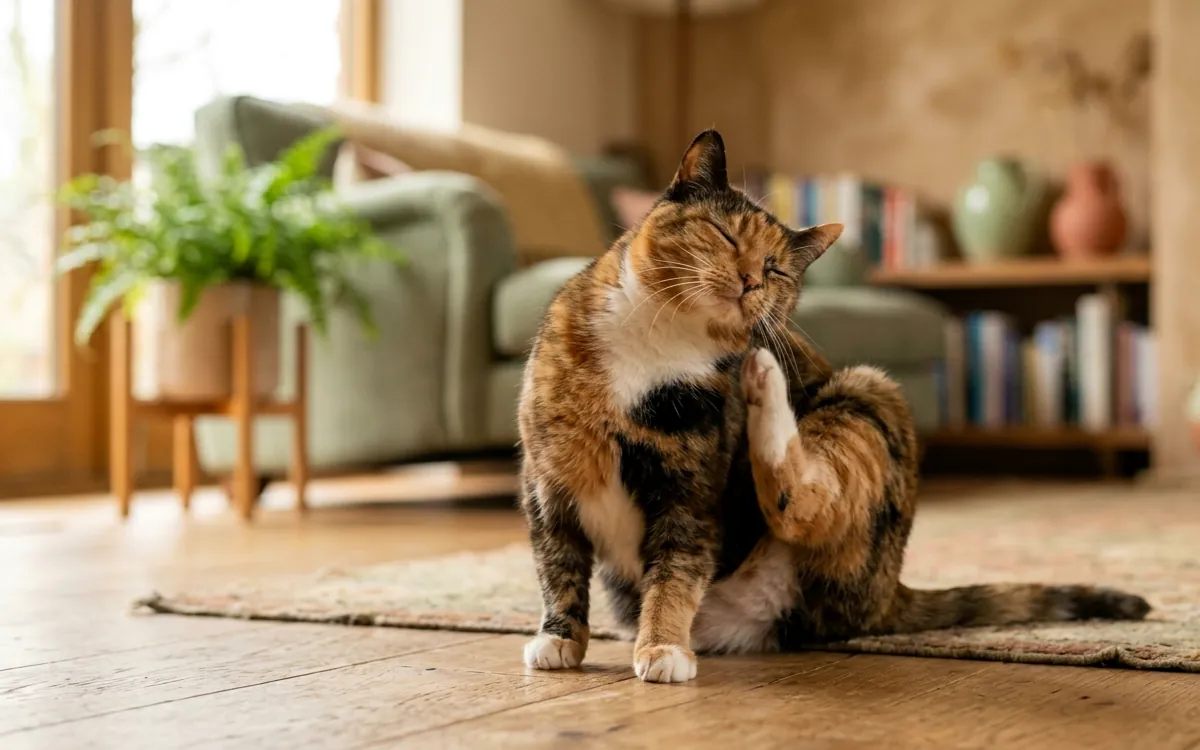
What are the signs? Some cats have visible fleas or black specks called flea dirt in the coat. Others show intense scratching, over-grooming, scabs, hair loss, or irritation around the neck and back. Cats with flea allergy can react strongly to a small number of bites, so not seeing many fleas does not rule out a flea-related problem.
Why does the environment matter? Adult fleas spend time on the animal, but immature stages develop in the environment. This is why effective control may require addressing all pets in the household and following a consistent veterinary prevention plan.
Why cat-specific products matter Cats are unusually sensitive to certain chemicals. Products intended for dogs can be dangerous to cats, particularly if they contain ingredients not labeled for feline use. Never apply a dog flea or tick product to a cat unless a veterinarian explicitly confirms that it is safe for that cat.
What does the veterinarian do? The skin and coat are examined for fleas, flea dirt, secondary infection, and other causes of itch. If hair loss or scabs are severe, other parasites, allergies, or infections may also need investigation.
Treatment and prevention Management usually combines a cat-safe flea-control plan with environmental control and treatment of skin complications when present. Because flea life cycles continue in the home, improvement may take time even when the right product has been started.
Frequently asked questions
Can fleas live in an apartment?
Yes.
If I treat only the itchy cat, is that enough?
Often not if there are other pets or environmental infestation.
Are natural essential-oil flea treatments safe?
Many essential oils can be harmful to cats. Use veterinary-approved products rather than improvised remedies.
Please note: This article is for general information and does not replace a veterinarian's physical examination, diagnosis or treatment. If your pet has severe, sudden or worsening signs, contact a veterinarian.
Track this at home with Petvimo.
Log symptoms, appetite, water intake and daily changes in one place.
Get the App