DOG HEALTH
Why Is My Dog Licking Its Paws? Allergies, Pain, and Infection
 PetvimoHealth Guide
Petvimo StandardReviewed against veterinary references
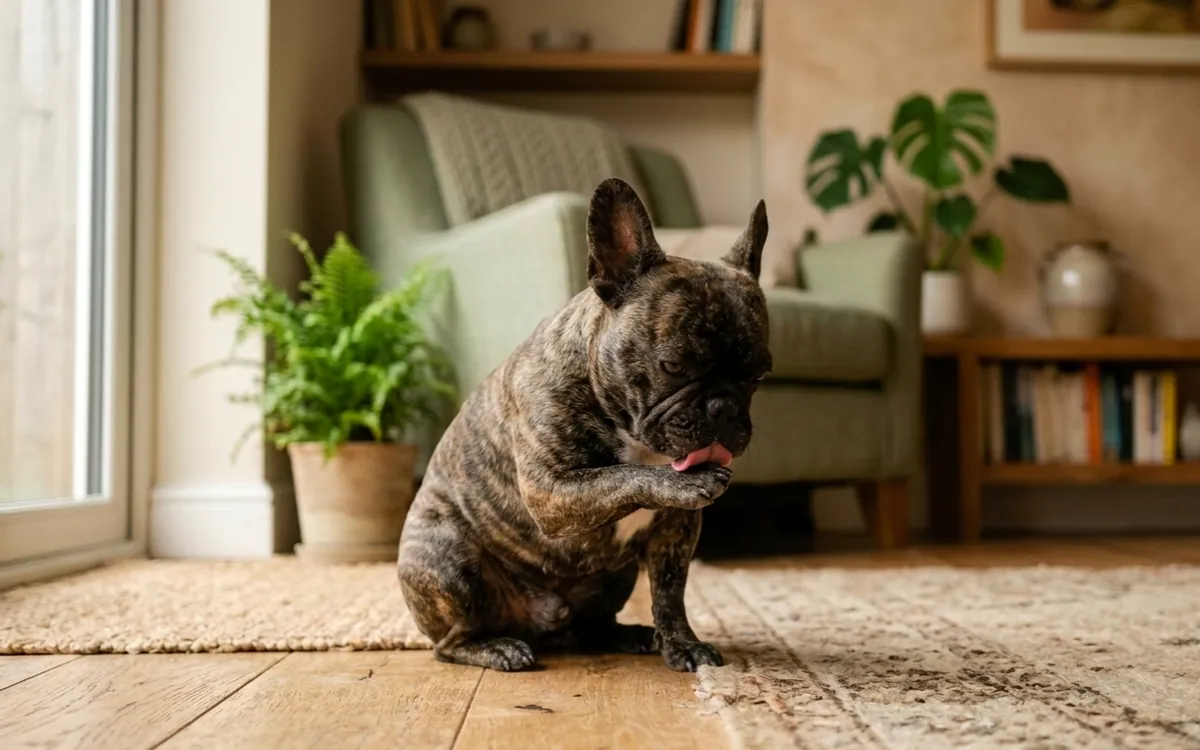
Occasional paw grooming is normal. Constant licking, chewing, redness, odor, staining, or hair loss usually means something is irritating the skin or causing pain.
One paw or several? Focusing on one paw can point toward a cut, broken nail, splinter, foxtail, insect sting, or orthopedic pain. Licking multiple paws is more commonly associated with allergies, generalized itch, yeast or bacterial overgrowth, or environmental irritation.
Allergies are common but not the only cause Dogs can develop environmental allergies and adverse food reactions. Allergic skin disease often affects the paws, ears, belly, face, and armpits. Repeated licking damages the skin barrier, which can lead to secondary infection and even more itching.
What can you check at home? Look for swelling, redness, cracked pads, discharge, odor, broken nails, or visible foreign material. Do not dig into painful tissue or apply harsh home remedies.
Veterinary evaluation The veterinarian may examine the skin microscopically for yeast or bacteria, check for parasites, assess the nails and pads, and evaluate for pain. Recurring cases may lead to a broader allergy workup or a controlled elimination diet.
Treatment A foreign body may need removal. Infection requires cause-specific treatment. Allergic disease often needs long-term management involving itch control, skin-barrier support, trigger reduction, and treatment of secondary infections.
Petvimo can help owners track which paws are affected, whether symptoms are seasonal, and whether ear problems or skin flares happen at the same time.
Frequently asked questions
Why are my dog’s white paws turning brown?
Chronic licking can stain light fur.
Can lawn chemicals irritate paws?
Yes. Irritants on grass, sidewalks, and treated surfaces may contribute.
Please note: This article is for general information and does not replace a veterinarian's physical examination, diagnosis or treatment. If your pet has severe, sudden or worsening signs, contact a veterinarian.
Track this at home with Petvimo.
Log symptoms, appetite, water intake and daily changes in one place.
Get the App