BIRD HEALTH
Watery Bird Droppings: Diarrhea or Too Much Urine?
 PetvimoHealth Guide
Petvimo StandardReviewed against veterinary references
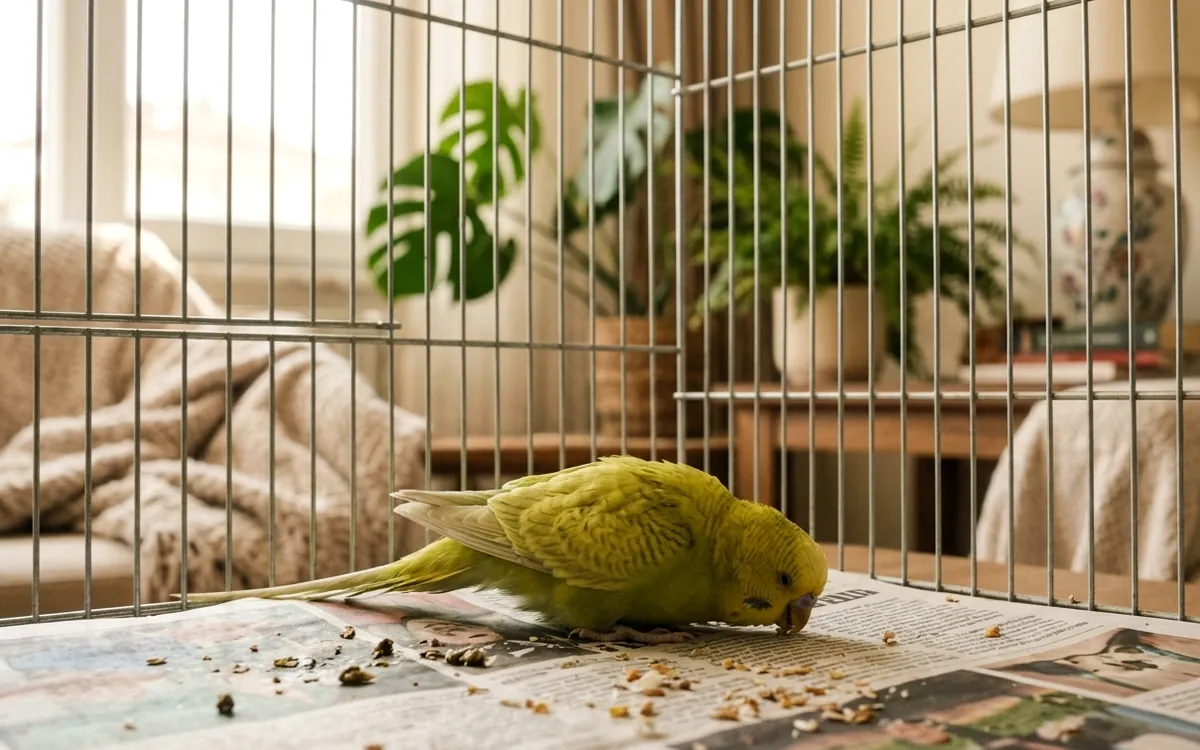
A bird dropping contains three components: feces, white urates, and liquid urine. Because these are passed together, an owner may see extra liquid around a dropping and assume the bird has diarrhea. Sometimes the real issue is increased urine rather than intestinal diarrhea.
What is true diarrhea? With true diarrhea, the formed fecal portion itself becomes abnormally loose or unformed. With increased urine, the fecal portion may still be reasonably formed but sit in a larger puddle of clear liquid.
Why can droppings become wetter? High-water foods, increased drinking, stress, kidney disease, liver disease, infection, toxins, and other conditions can change the amount of liquid in droppings. One unusual dropping is less informative than a persistent pattern.
What else should you monitor? Look for appetite changes, weight loss, vomiting or regurgitation, puffed feathers, reduced activity, and changes in color or volume. A small gram scale can help owners notice gradual weight loss in small birds before it becomes visually obvious.
What does an avian vet do? The veterinarian may evaluate hydration, body condition, the abdomen, and the digestive tract. Fecal testing, bloodwork, and imaging may be used depending on the pattern.
Treatment Treatment may include hydration and nutritional support while the cause is addressed. Confirmed parasites, infection, organ disease, or dietary problems each require different management. Random antibiotics or human anti-diarrheal products should not be used.
Petvimo can help owners save photos and track droppings over time alongside appetite and behavior.
Frequently asked questions
Can fruit make droppings look watery?
Yes, high-water foods can temporarily increase urine.
Does green poop mean infection?
Not necessarily. Diet and reduced food intake can also change color.
Please note: This article is for general information and does not replace a veterinarian's physical examination, diagnosis or treatment. If your pet has severe, sudden or worsening signs, contact a veterinarian.
Track this at home with Petvimo.
Log symptoms, appetite, water intake and daily changes in one place.
Get the App